Apple has begun rolling out its latest suite of AI powered tools for the Apple Watch into beta testing, bringing a series of capabilities known as Audio Intelligence to developers via the iOS 27.3 update. First teased during the Surprise and Shine event in September, these opt-in features are designed specifically for users of the Series 12 and Ultra 4 watches. While some functions focus on accessibility, such as helping hearing impaired users identify sirens or utilizing Shazam to recognize background music, the most ambitious additions target how we track our daily interactions.
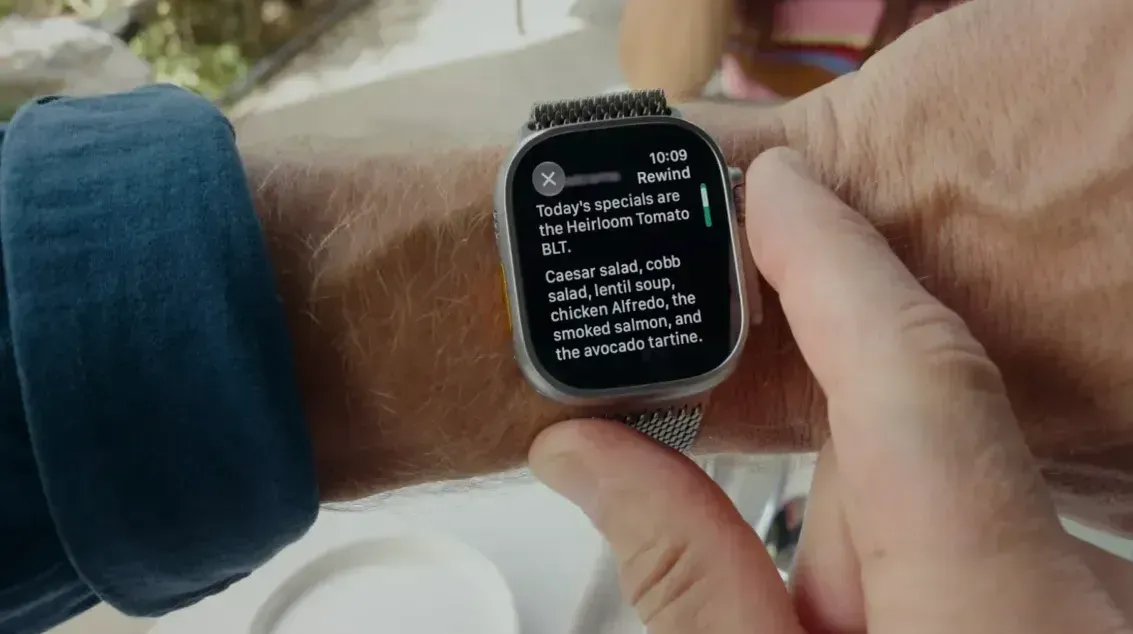
Two of the more provocative tools, Live Rewind and Siri Recaps, aim to solve the common problem of forgetting details mid conversation. Live Rewind allows a user to double press the digital crown to instantly generate a text snippet of the last fifteen seconds of audio. Whether you missed a specific direction or a menu special at a restaurant, the watch provides a brief window to read what was said before the data disappears forever. To address potential privacy concerns regarding secret recordings, Apple has included an audible chime and a visible animation to alert others whenever this function is triggered.
Taking things a step further, Siri Recaps acts as an automated secretary by summarizing longer discussions into high level notes. Rather than creating verbatim transcripts or identifying individual speakers, the system extracts key facts like deadlines or pricing into concise summaries. This tool is intended for environments like business meetings or parent teacher conferences where taking manual notes might be distracting. Users can manage these recaps through custom schedules or manual toggles in the Control Center, ensuring the device isn’t listening during private hours or while noise canceling headphones are active.
To maintain security and trust, Apple claims that raw audio is handled within a secure enclave on the S11 chip and passed to a paired iPhone rather than being stored openly. The process involves stripping away filler words locally before sending encrypted text to Apple’s Private Cloud Compute for final summarization. By filtering out sensitive data like financial identifiers and government IDs, Apple hopes to position these wearable AI assistants as helpful productivity boosters that respect boundaries while augmenting human memory.